- Album
- Passion: Music for The Last Temptation of Christ (1989)
- Director (film)
- Martin Scorsese
- Label
- Real World Records / Geffen / Virgin
- Grammy
- Best New Age Album, 1990
- Featured musicians
- Nusrat Fateh Ali Khan, Youssou N'Dour, Baaba Maal, L. Shankar, Hossam Ramzy, Mahmoud Tabrizi-Zadeh, David Rhodes
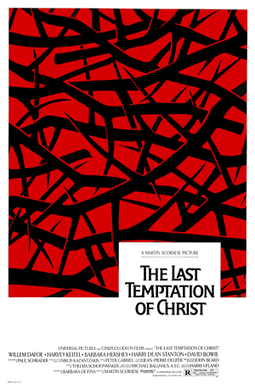
In 1985 Martin Scorsese asked Peter Gabriel to score his film about Jesus's last 24 hours. Gabriel had until then been a rock star — frontman of Genesis, solo artist of Sledgehammer, MTV regular. He took the brief and did something almost no Anglophone pop musician had done before: he flew to Senegal, Pakistan, Egypt, and northern Africa, recorded local musicians on their own instruments, brought the tapes back to Bath in England, and built an album around them.
The film, The Last Temptation of Christ, was released in 1988 to international protest. The album, Passion, was released in 1989, won the Grammy, and became one of the foundational documents of what was then called "world music" — a phrase Gabriel himself had helped coin two years earlier with the founding of WOMAD (World of Music, Arts and Dance).
The instruments on the record
What Gabriel built was unprecedented for a Western pop artist's "serious" album in 1989. The instrumentation reads like a Cairo conservatory's instrument inventory:
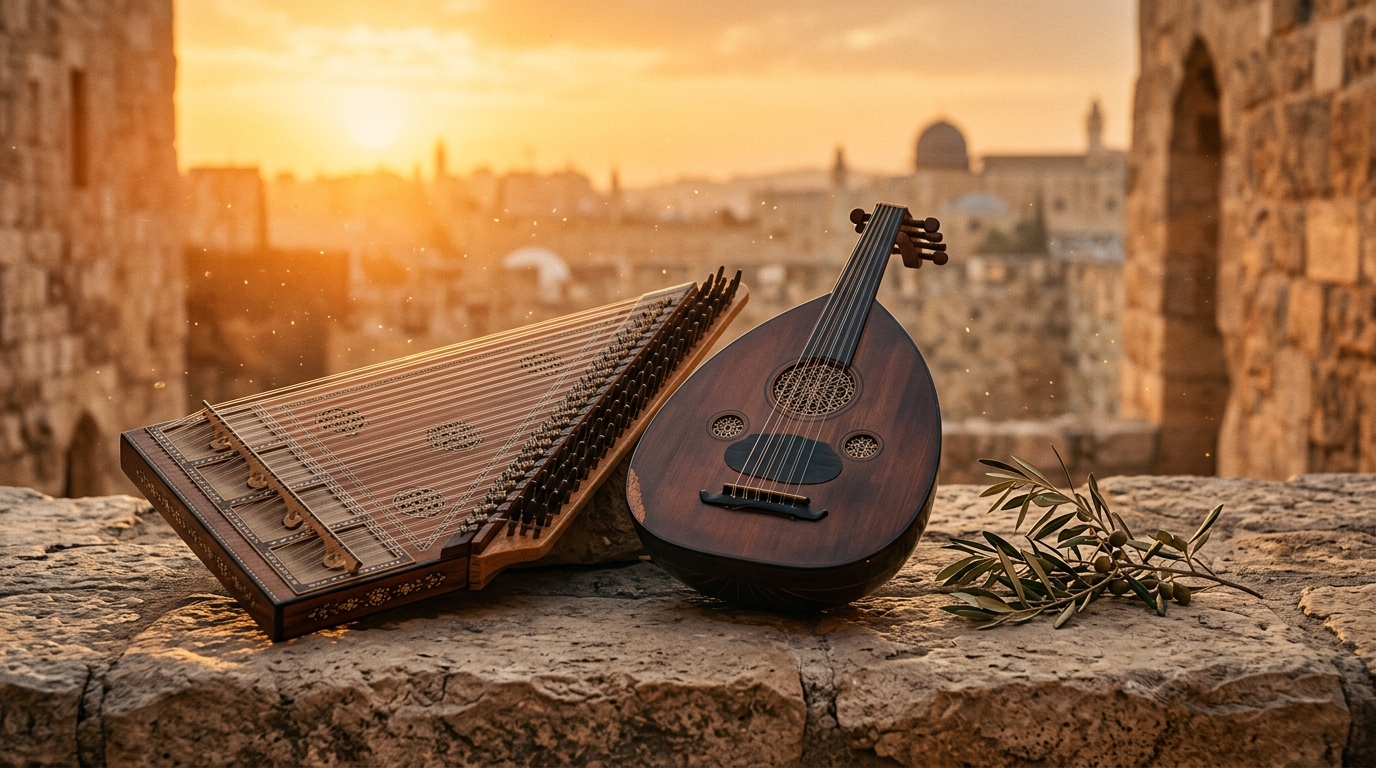
- Kanun — played by Mahmoud Tabrizi-Zadeh (Iranian-born santur and kanun virtuoso based in Paris)
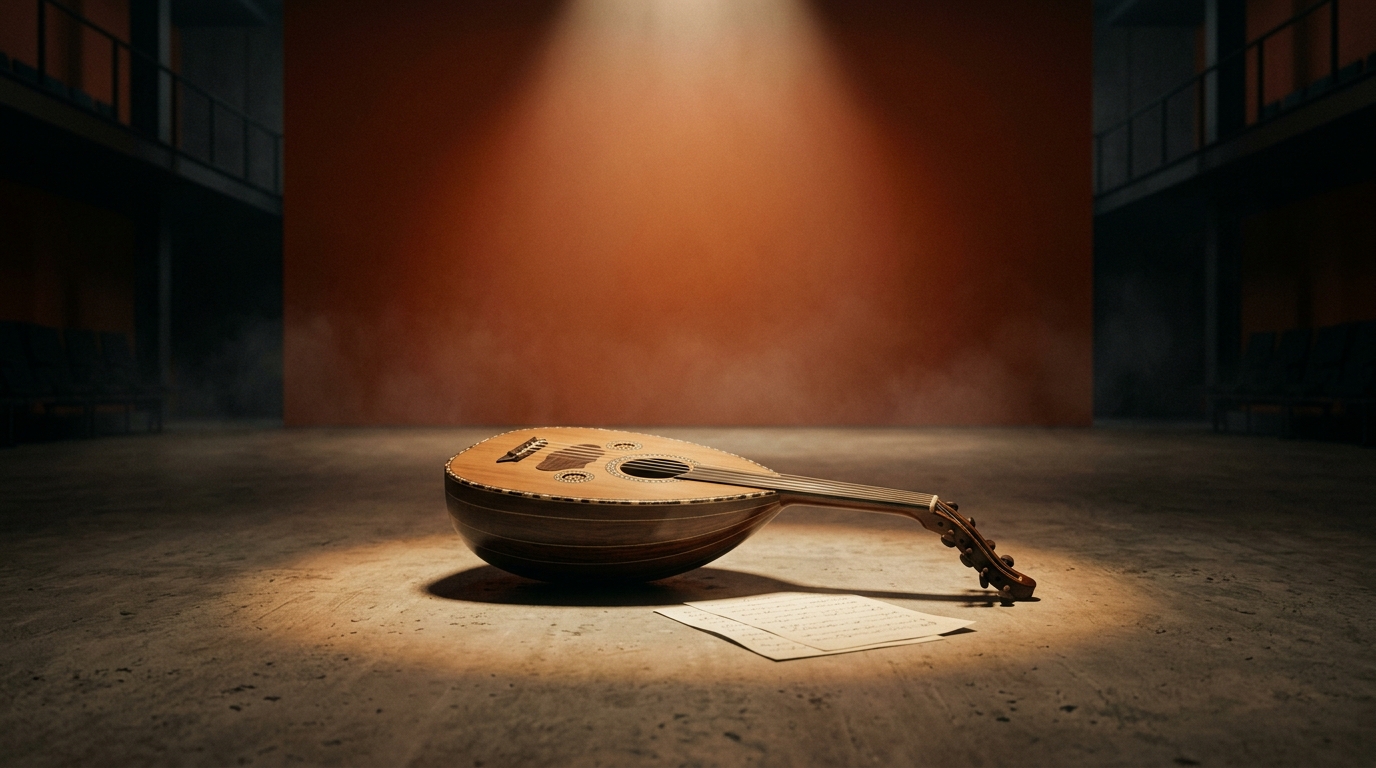
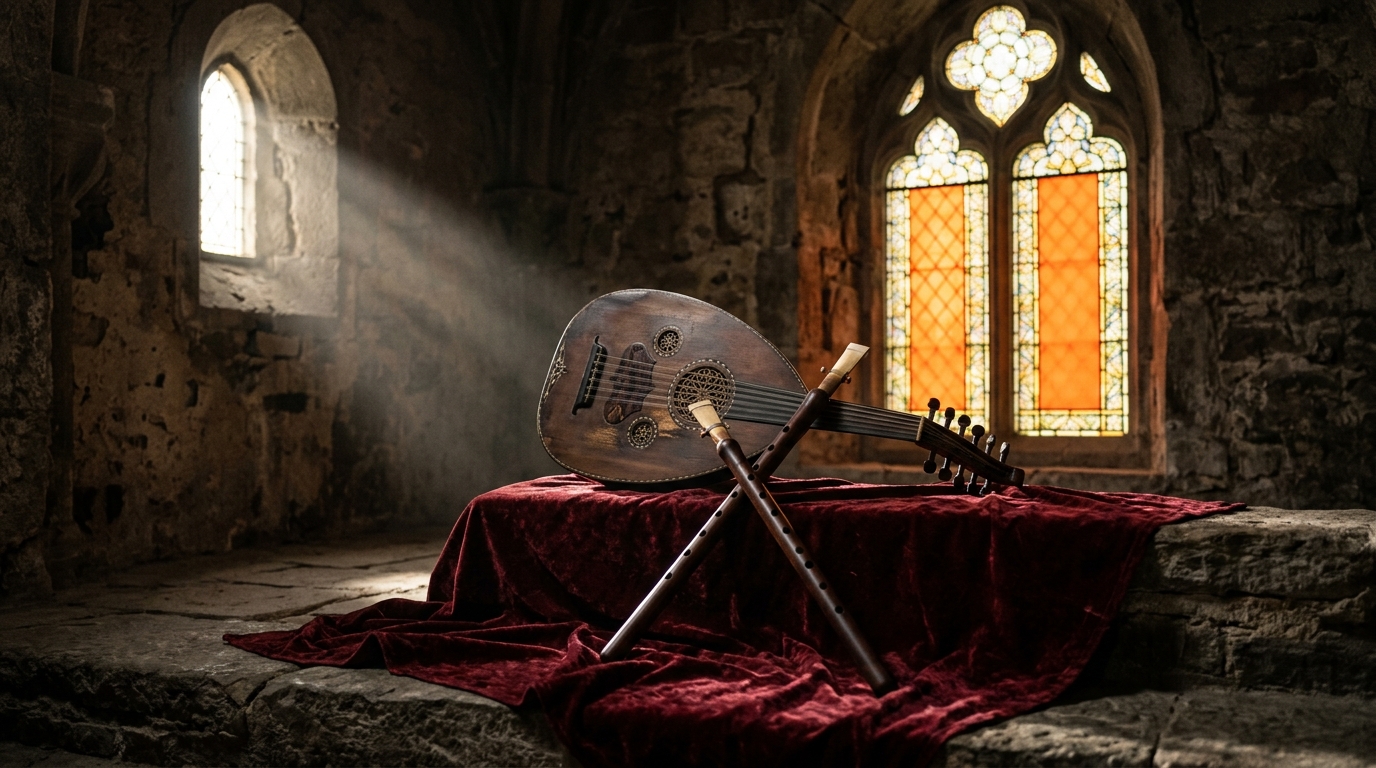
- Ud — Arabic tuning, fretless, multiple takes layered
- Ney — the end-blown reed flute of Ottoman Sufi music
- Doudouk (duduk) — the Armenian double-reed wind instrument
- Tabla, Doholla, Tar (frame drum), Sagat — percussion played by Egyptian master Hossam Ramzy
- Vocals — Nusrat Fateh Ali Khan (Pakistani Qawwali), Youssou N'Dour (Senegalese), Baaba Maal (Senegalese)
The drum kit, synthesizer pads, and electric guitar — Gabriel's normal palette — sit underneath but never on top. The lead voices on the album are Arabic, Pakistani, and West African.
Why this was new
Before Passion, the standard Western treatment of Eastern instruments was either ethnographic (anthropology-flavoured field recordings sold to academic listeners) or exotic (Indian sitar dropped into a Beatles album to suggest acid). Gabriel did something else: he credited every musician by name, paid them session rates that matched what he was paying Bath studio engineers, and released the album on his own label so the publishing structure was transparent.
That label — Real World Records — launched the same year. It became home to Nusrat Fateh Ali Khan (whose Mustt Mustt sold over a million copies), to the Tunisian-born Ali Hassan Kuban, to the Senegalese Baaba Maal, to dozens of Arab, Persian, and Pakistani artists. The financial structure Gabriel set up — proper royalties, not flat session fees — is one of the under-discussed reasons world music boomed commercially in the 1990s.
The kanun line on "A Different Drum"
The most-discussed instrumental moment on Passion is the kanun line on track six, "A Different Drum." Tabrizi-Zadeh plays a slow descending phrase in maqam Saba — a melancholy mode with a flat fourth that distinguishes it sharply from Western minor. The phrase repeats over a programmed drum machine pattern. The two musical systems — fully equal-tempered electronic rhythm and a microtonal Arabic mode — should not coexist. They do, because the album refuses to translate either into the other's grammar.
That refusal is, in retrospect, the ethic of the entire Real World catalogue.
Why Passion still matters
Real World Records became the supply line for half of the prestige Eastern-strings work in Western cinema across the next two decades. Hossam Ramzy, the Egyptian percussionist on Passion, played on Gladiator, The Mummy Returns, Black Hawk Down, and dozens of other Hollywood scores. L. Shankar appears on Scorsese, Coppola, and Cameron soundtracks. The vocabulary the album opened became the vocabulary the next twenty years used.
Gabriel followed Passion with Passion: Sources (1989) — a companion album of unaltered field recordings, presenting the source musicians on their own terms — and continued releasing on Real World until the present. He is now in his mid-70s and still touring; the WOMAD festival happens annually. Passion is the document those careers stand on.
For musicians using Maqam
The kanun lines on Passion are an unusually well-recorded example of what Mahmoud Tabrizi-Zadeh — and the entire generation of session kanun players Gabriel hired — were doing with the instrument in 1989. The maqamat (Saba, Bayati, Rast, Hicaz) appear cleanly. The mandals — the small silver levers along the kanun's left edge that shift its perde positions — are audible as they change between cues.
Maqam ships the kanun tunings used on the record: Türk Akort for the Rast-family cues, and the modal variants for Saba, Hicaz, Hüseyni, Segâh. Auto-detect locks within a second. If you want to play along to "A Different Drum" — many kanun students do — Maqam is the tuner that will keep you in the same intonation as the record.
Peter Gabriel's Passion is the album where the kanun became a Grammy-winning lead instrument on a major-label Western release. It is the record that, more than any other, made the next forty years of cross-cultural Eastern-strings work commercially viable.
 GET
GET