- Born
- Halfaouine, Tunis, 1957
- Instrument
- Arabic ud (oud), 11 strings, fretless
- Label
- ECM Records, Munich (since 1991)
- Key albums
- Barzakh (1991), Madar (1994), Thimar (1998), Astrakan Café (2000), Blue Maqams (2017)
For most of recorded history, the ud was a regional instrument. You could hear it in Cairo, Aleppo, Istanbul, Baghdad. You could not hear it in Munich. Then in 1991 Manfred Eicher — the founder of ECM Records, the label that taught Europe how Keith Jarrett and Jan Garbarek sounded — went to Tunis and signed Anouar Brahem.
What happened next was not fusion. Brahem refused fusion. He played the ud as it had been played for a thousand years — slow, fretless, microtonal, harmonically rooted in the Arabic maqamat. ECM put him in the same studio as Jarrett, gave him the same engineer, the same room sound, the same release schedule. By the late 1990s, an Arabic instrument was being shelved next to Pat Metheny in record stores in Stockholm and Tokyo.
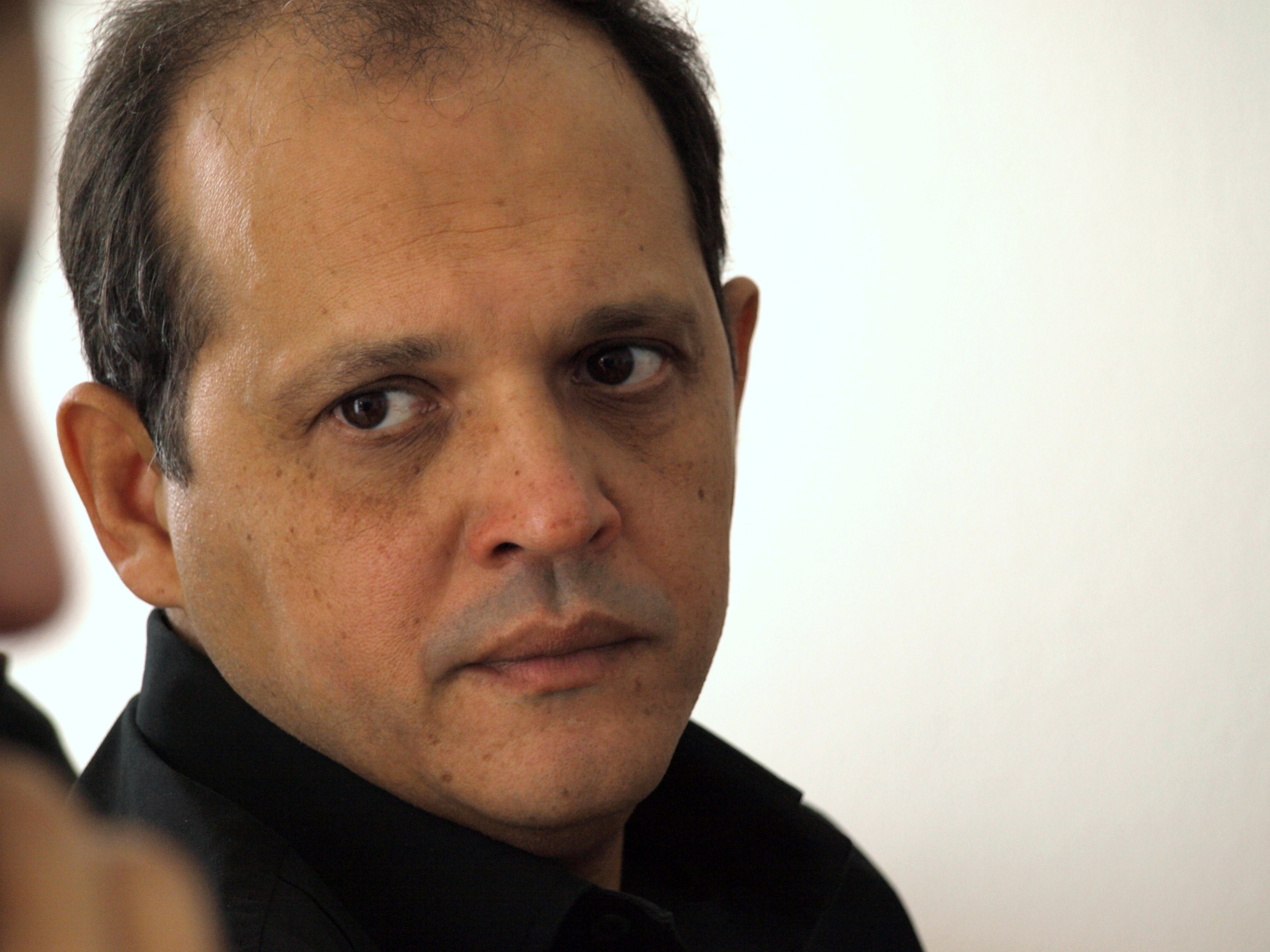
Madar (1994): the album that opened the door
The pivotal record was Madar, recorded in 1994 with Jan Garbarek (Norwegian saxophone) and Ustad Shaukat Hussain (Pakistani tabla). It sold over 200,000 copies — staggering for an instrumental album on a jazz label — and ended up on best-of-decade lists from The Wire, The Guardian, and Rolling Stone.
Madar works because Brahem refused to translate. He plays the same maqam he would play in a Tunis tea-house. Garbarek plays Norwegian church modes. The two harmonic systems don't meet — they coexist, polite and parallel, separated by deliberate silence. Eicher's production gives the silence as much weight as the notes. The result is an album that sounds like a conversation across a long table.
The slow ud
What Brahem changed, technically, is tempo. Classical ud playing in Cairo and Aleppo had become increasingly virtuosic through the twentieth century — fast runs, complex ornamentation, dramatic taqsim (improvised solo). Brahem went the other direction. His phrases sit, breathe, repeat. A single jins (tetrachord) can occupy thirty seconds. He uses the bass strings — the Arabic ud's deepest courses — as drones the way an Indian sitar player uses the chikari.
This was, in 1991, considered eccentric. By 2010 it had spawned an entire generation of slow-ud players — Dhafer Youssef (also Tunisian, also signed to ECM-adjacent labels), Rabih Abou-Khalil (Lebanon), Trio Joubran (Palestine). The slow ud is now the export ud, the one Western audiences expect.
Blue Maqams (2017): the full crossover
By 2017 Brahem was confident enough to put the ud into a New York jazz quartet — Dave Holland on bass, Jack DeJohnette on drums, Django Bates on piano. Blue Maqams is the album he had been building toward for twenty-five years. The title is precisely literal: the modal system of Arabic maqam meets the blue notes of African-American jazz, and neither apologises for the other.
The album debuted at #1 on the Billboard Traditional Jazz chart. The ud was no longer a guest at the jazz table; it had its own seat.
The Tunisian tuning
Brahem plays the Arabic ud tuning, which Maqam carries as a preset: C — F — A — D — G — C. The bass string sits a full fourth lower than the Turkish ud's bass; the harmonic centre of gravity is darker, more maqam Bayati, less Rast. If you pick up an ud after listening to Madar, this is the tuning your ear is trained for.
Maqam's auto-detect identifies the Arabic tuning by the C bass course. Strum any open string and the app locks on within a second. If you're trying to play along to Brahem records — and many ud students do, the way guitar students play along to Hendrix — Maqam shows you the cents distance from each note, perde by perde.
Why this matters
Before Brahem, ud-on-record meant one of two things: traditional Arabic art music sold to Arab audiences, or "world music" compilations sold to Westerners who liked exotic backdrops. Brahem refused both shelves. ECM put him in the contemporary-music section. The ud became a contemporary instrument — not a folk artefact, not a tourist trinket, but a tool living musicians could carry into a present-day concert hall.
That shift is what lets a ud teacher in Berlin or Tokyo or Mexico City have students at all in 2026. Maqam exists for the next generation of those students.
 GET
GET