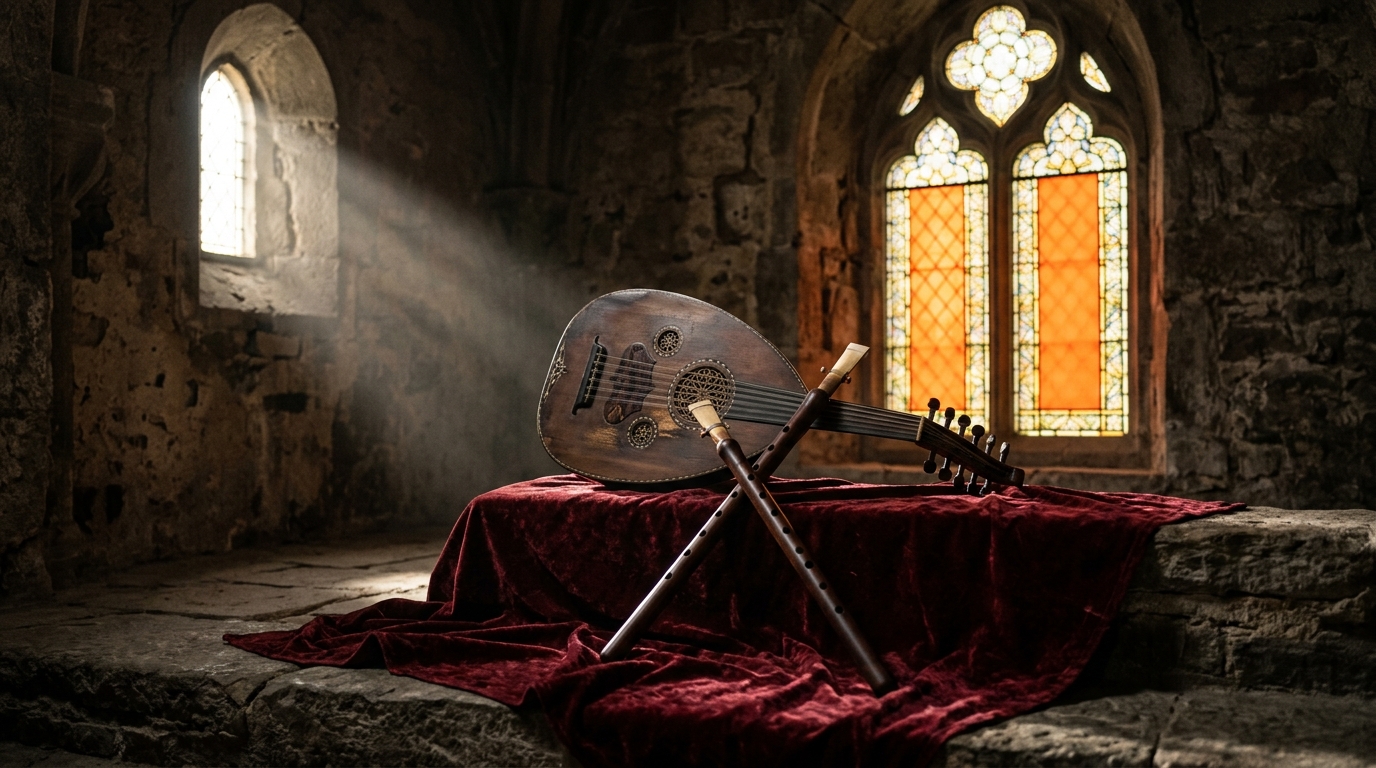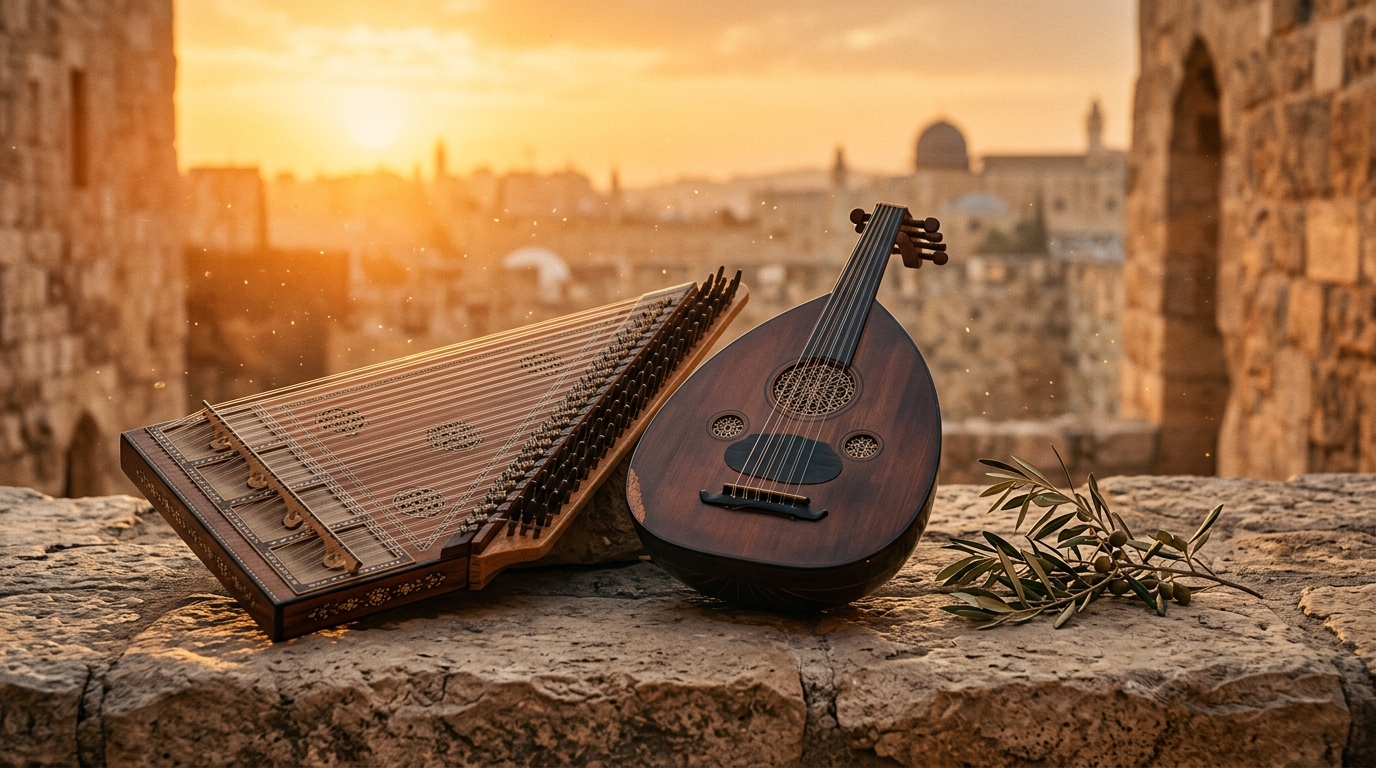
- Lawrence of Arabia (1962)
- Composer: Maurice Jarre · Director: David Lean
- The Mummy (1999)
- Composer: Jerry Goldsmith · Director: Stephen Sommers
- Aladdin (1992)
- Composer: Alan Menken · Director: John Musker, Ron Clements
- Prince of Persia (2010)
- Composer: Harry Gregson-Williams
- Instruments used
- Kanun (qanun) · Ud (oud) · Ney · Santur · Riq
If you have ever heard a Hollywood film cut to a wide shot of dunes, that camera move was very probably scored with a kanun. The plucked, microtonal zither of Cairo and Istanbul has been the studio shorthand for "desert horizon" since 1962, when a young French composer named Maurice Jarre wrote his first major Hollywood score.
Lawrence of Arabia (1962): the founding score
David Lean's Lawrence of Arabia won seven Academy Awards. One of them, Best Original Score, went to Maurice Jarre — a 38-year-old French composer who had never written a major film before. Jarre had ten weeks. He used them to build a score around two ideas: the sweeping orchestral theme in F# major that everyone remembers, and a quieter, fragmented Arabic palette underneath it — kanun, ney flute, riq frame drum.
The kanun in Lawrence is played in maqam Rast (the rough Arabic equivalent of a major scale, but with a half-flat third sitting a quarter-tone lower than Western ears expect). Jarre had asked his Cairo session musicians to play the way they would play in a wedding orchestra. He kept the result. The half-flat segâh — the microtonal note that does not exist on a piano — is audible in every desert cue. That single quarter-tone is what made the score sound foreign, mysterious, geographically specific. Without it, the desert in Lawrence would just be a beach.
Jarre would score over 150 films, three Lean epics (Doctor Zhivago, A Passage to India), and would always credit Lawrence as the score where he learned that an Eastern instrument can carry an entire visual language. He died in 2009.
The Mummy (1999): the kanun goes pulp
Thirty-seven years after Lawrence, Jerry Goldsmith — one of the most prolific Hollywood composers of the twentieth century, responsible for Planet of the Apes, Alien, Total Recall, L.A. Confidential — sat down to write The Mummy. The film was pulp adventure, not prestige drama. Goldsmith needed to evoke ancient Egypt in five seconds before the next stunt sequence.
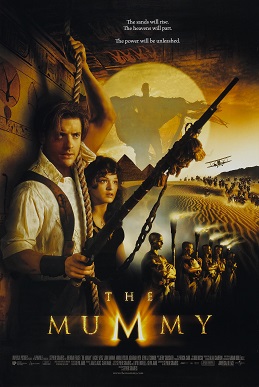
His solution was the kanun, doubled by a ud playing the same line a fifth lower. The opening Cairo theme — woodwind, then strings, then the kanun — became one of the most-recognised score textures of the 1990s. The Mummy soundtrack sold 600,000 copies. Goldsmith got an Annie Award nomination. And for a generation of children watching the film on VHS, the kanun became the sound of pyramids the way the bouzouki had become the sound of Greek islands a generation earlier.
Aladdin (1992): the kanun for kids
Between Jarre and Goldsmith, Alan Menken did something even broader. The opening of Aladdin — "Arabian Nights" — is a kanun riff. Disney's music department, building a children's film grossing over $500 million worldwide, treated the Arabic plucked zither as the universal stand-in for "Middle Eastern fairy tale." The choice was, in 1992, considered slightly stereotyped; by 2026, most children who can hum the Aladdin overture have heard the kanun without ever being told its name.
The recipe
By the early 2000s the Hollywood "desert palette" was a recognised orchestration formula:
- Kanun for plucked motion — terraced fifths, falling phrases, mandals shifting between maqamat
- Ud for melody, almost always doubled with strings or duduk for emotional weight
- Ney for spiritual stillness — a slow, breathy fourth or fifth that signals contemplation
- Santur (Persian hammered dulcimer) for shimmer, especially after Prince of Persia (2010)
- Riq or darbuka for pulse — but never a Western drum kit
The palette appears in Hidalgo (2004), Body of Lies (2008), Lord of War (2005), Syriana (2005), Argo (2012). Every desert in modern Hollywood gets at least one kanun cue.
What this means for a kanun player
It means that the instrument you are learning sits inside one of the most-heard score traditions in cinema. The mandals — those small silver levers along the left edge — that allow the kanun to shift between maqamat are the technical reason Hollywood reaches for it. No other plucked zither can change keys in mid-cue without retuning.
Maqam ships every kanun tuning a session musician would need: the standard Türk Akort, the variants for maqam Rast, Hicaz, Hüseyni, Saba, Segâh. Auto-detect finds the open courses by their characteristic plucked attack — a perde-by-perde gauge with cents precision, the same workflow a film-score session player uses in a Cairo studio.
The kanun's twentieth century was a slow leak from the Mediterranean east to the Hollywood west. The kanun's twenty-first century is being recorded by people who learned the instrument from Maqam, in apartments, on second-hand instruments, two thousand kilometres from any traditional teacher. That's the path we built the app for.
 GET
GET