- Strings
- 8 (4 double courses)
- Neck
- Long, ~50 cm playable, with 18–26 tied frets
- Body
- Lute-shaped wooden bowl, smaller than an ud
- Family
- Lavta (Ottoman classical)
- Default tuning
- D-A-D-A (modern) or C-G-D-A (Türk Bolahenk)
Between roughly 1900 and 1970, the lavta almost vanished. The Ottoman fasıl ensembles that featured it were dissolved, the imperial schools that trained players were closed, and the surviving instruments sat in private collections. By the 1960s you could count working lavta players on one hand.
Then something happened. A generation of luthiers — beginning in Istanbul in the late 1970s — started rebuilding lavtas from old photographs, and a small school of players, led by figures like Tanburi Cemil Bey's family lineage and the modern player Cinuçen Tanrıkorur, brought it back. Maqam ships four of its modern tunings.
What a lavta actually is
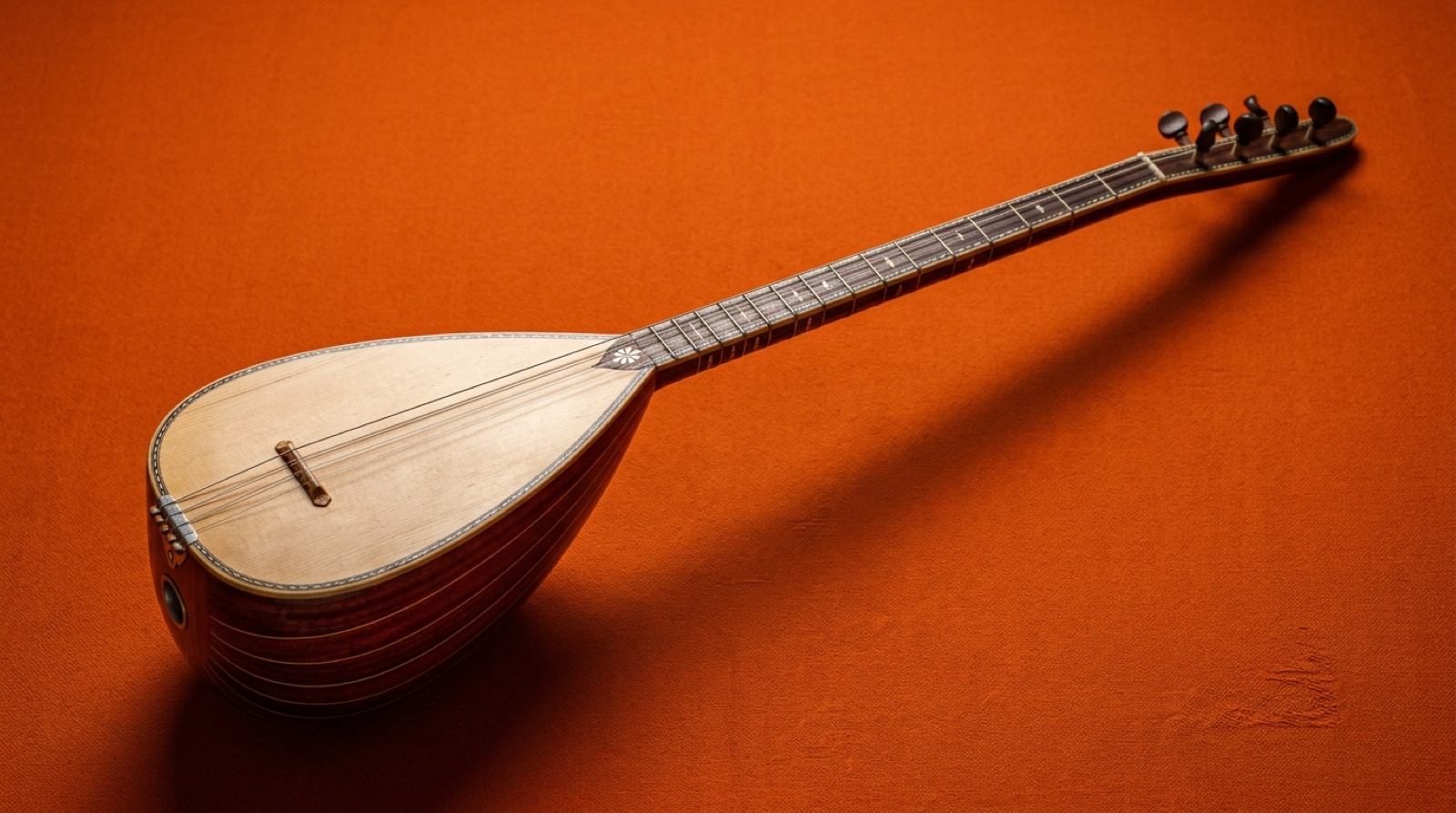
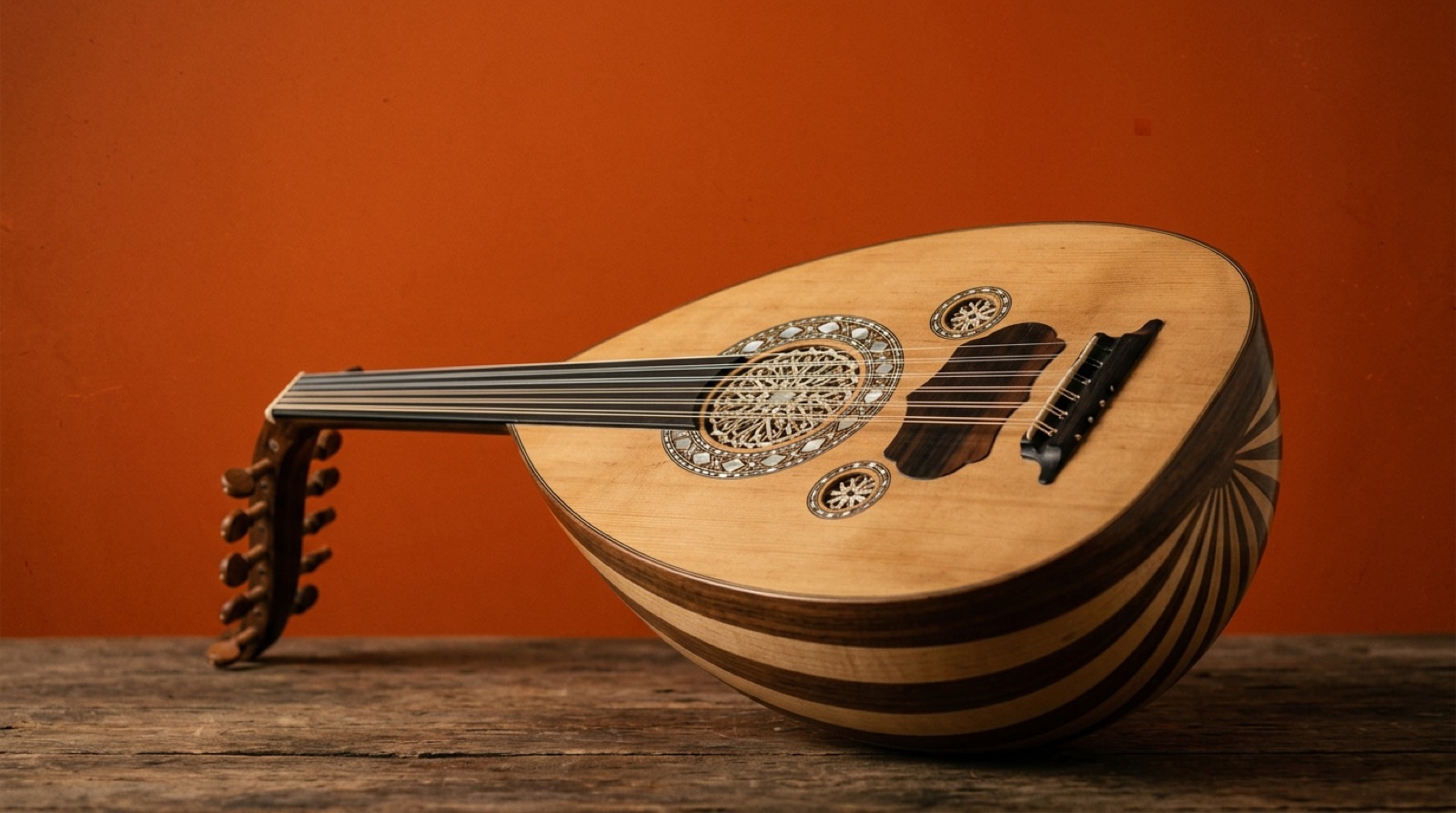
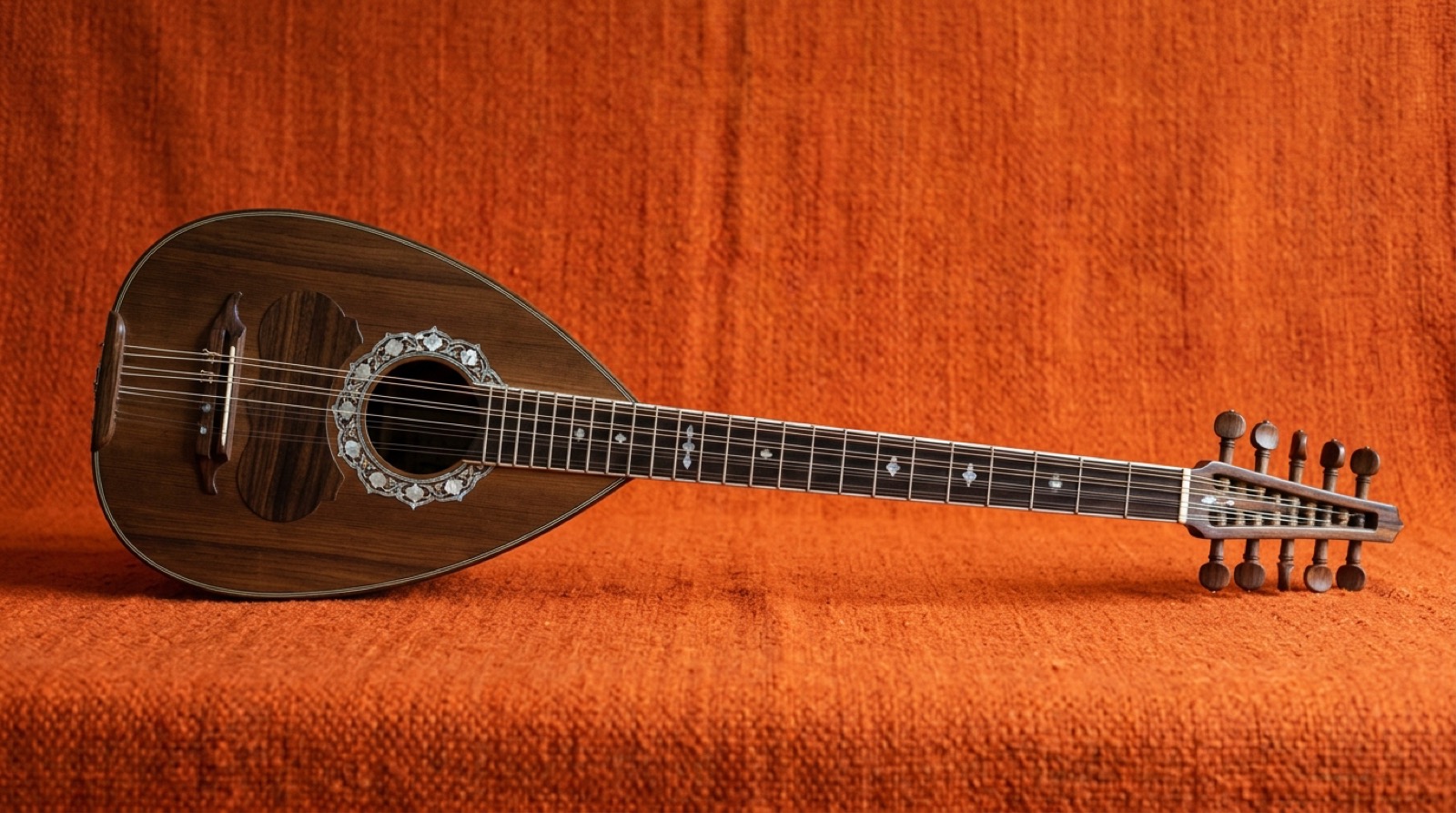
The lavta looks like an ud's slimmer, fretted cousin. The body is smaller and shallower, the neck is longer, and there are between 18 and 26 tied gut frets quantizing the AEU comma intervals — like the tanbur, but smaller and plucked melodically rather than primarily as a drone.
The result is an instrument that can play melodic makam lines with comma accuracy while sustaining its own harmony from the open courses. Where the ud is fretless and demands purely intervallic playing, and the tanbur is mostly drone-and-melody, the lavta is the only fretted Ottoman lute that participates fully in both lines.
Four tunings, two eras
The historical Ottoman tuning is Türk Bolahenk — C3 G3 D4 A4, four courses in alternating fourths and fifths. This is the tuning preserved in the imperial-era recordings and the tuning every reconstructed historical lavta is built around.
The modern revival generation also uses D-A-D-A (D3 A3 D4 A4) — two pairs of fifths with the same octave doubled at top and bottom. This is the tuning Cinuçen Tanrıkorur favoured for solo work, and the tuning most contemporary lavta makers ship their instruments in.
Maqam ships both, plus two regional variants (Acem-flavoured E-A-D-G and a Si-Mi-Si-Mi tuning from the early 20th century). Auto-detect resolves all four cleanly from the open-string signature.
Why frets matter on the lavta
The frets are the difference between an ud and a lavta. With frets at every comma, the lavta player can produce a precise melodic line at speed — passing tones, runs, ornaments — without the ear-tuning every note that ud playing demands. The trade-off is that the comma frets are fixed: you can't bend a Nim Hicaz down to Hicaz the way you can on a fretless ud.
This is why lavta players use Maqam differently than ud players. Tuning the open strings is the entire game. Once the open D and A and the harmonic relationships between courses are accurate to a cent, the frets do the rest of the work — and the fingers don't have to.
Every tuning, mapped.
Below is every tuning Maqam ships for the Lavta — straight from the app's reference data. Strings, reference frequencies, related makams, and notes.
Per Phase 0.2 decision, low-to-high order from user's tizden-peste description.
Modern lavta D-A-D-A standard tuning (4ths and 5ths). Reference: Wikipedia, Sultan Instrument, Boma Music.
Turkish Bolahenk transposition — concert pitch G-D-A-E. Used in classical Ottoman pieces.
Find the perde in your pocket.
The lavta is the proof that Ottoman classical music can be reconstructed. Maqam exists for that reconstruction.
 GET
GET