- Strings
- 12 (6 double courses)
- Body
- Aluminum pot with plastic skin head
- Neck
- Ud-style fretless wooden neck
- Family
- Cümbüş (Anatolian folk, 1930)
- Default tuning
- Ud-style — D2 A2 D3 G3 B3 E4 A4 (paired)
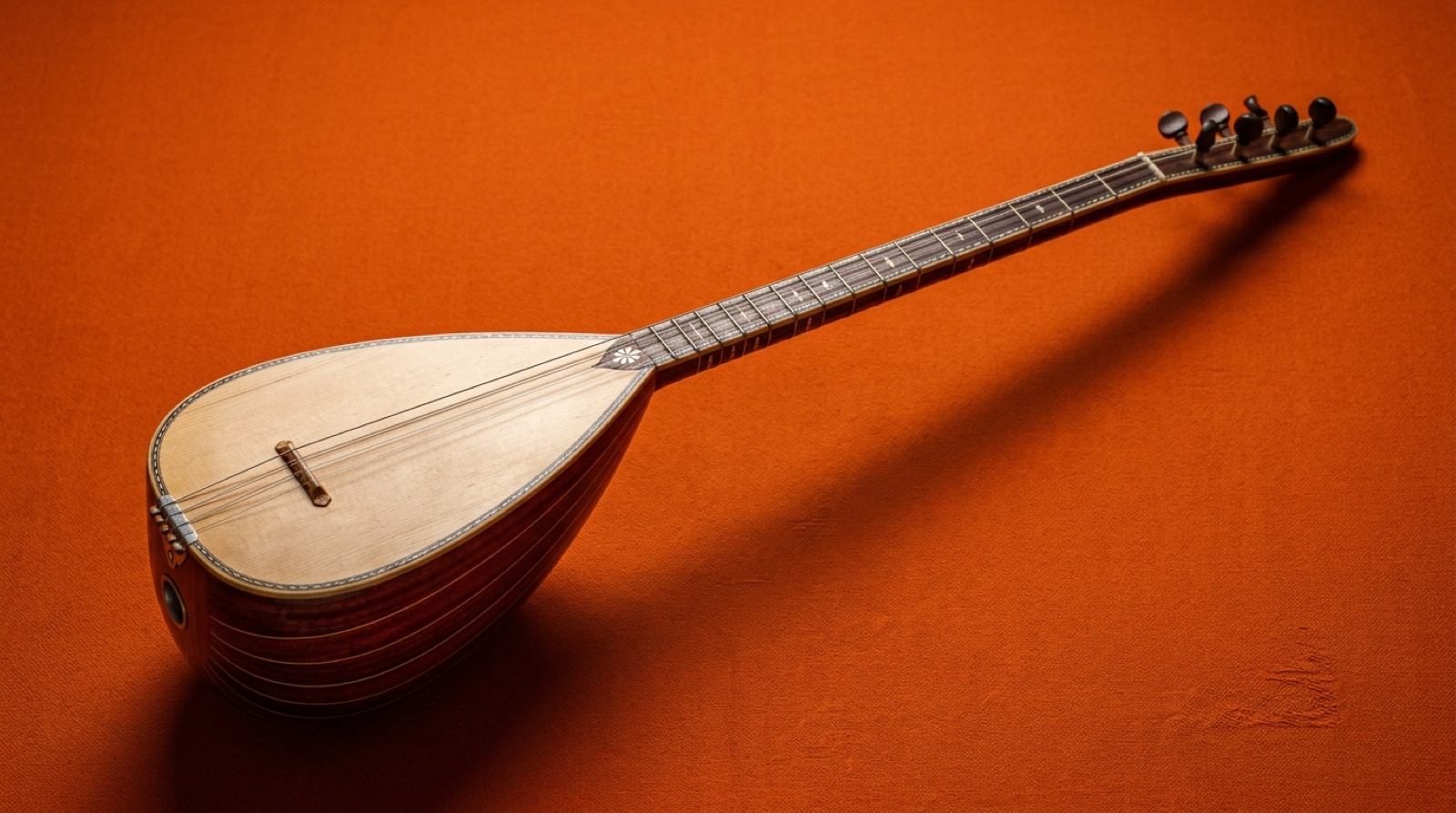
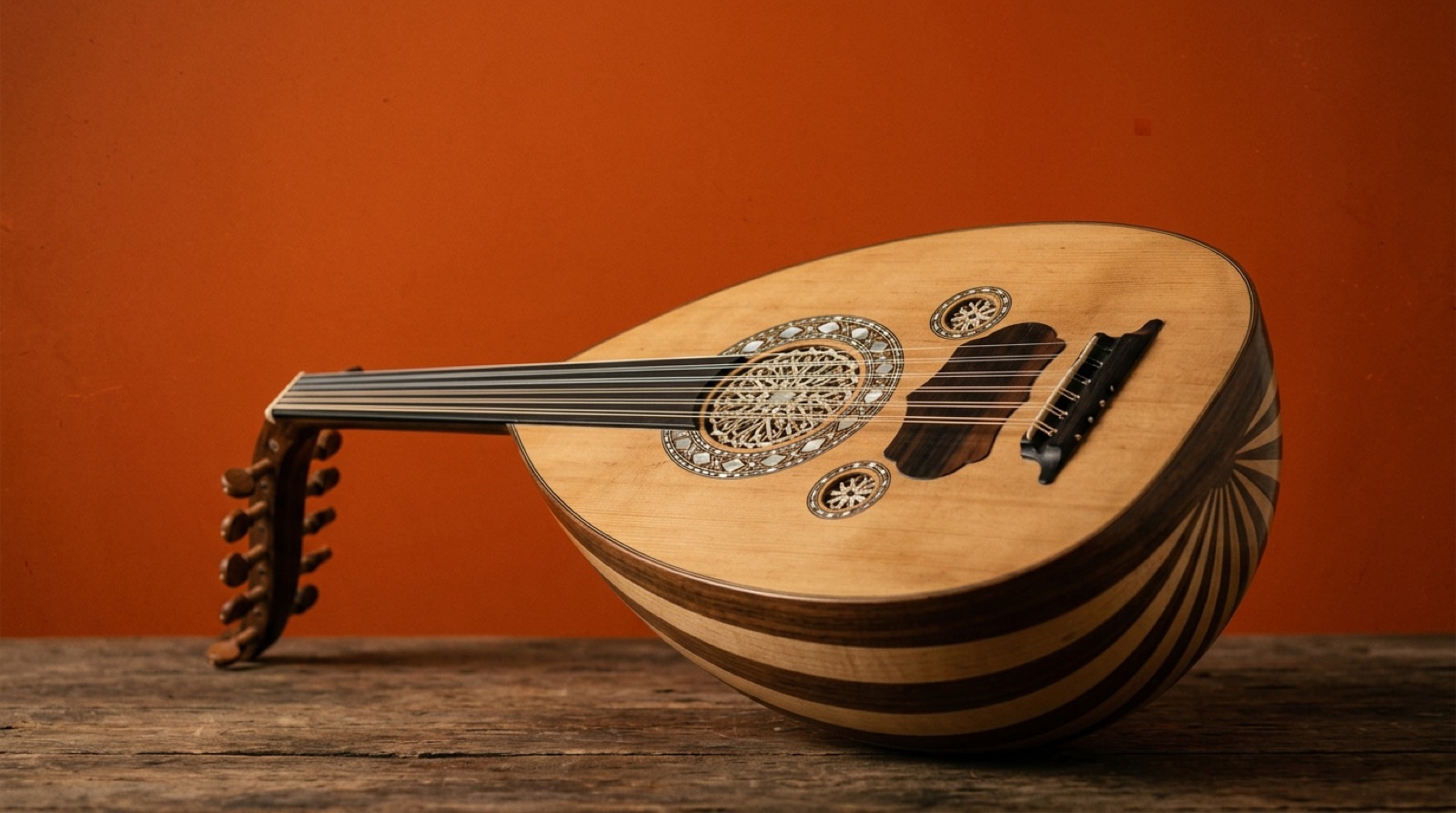
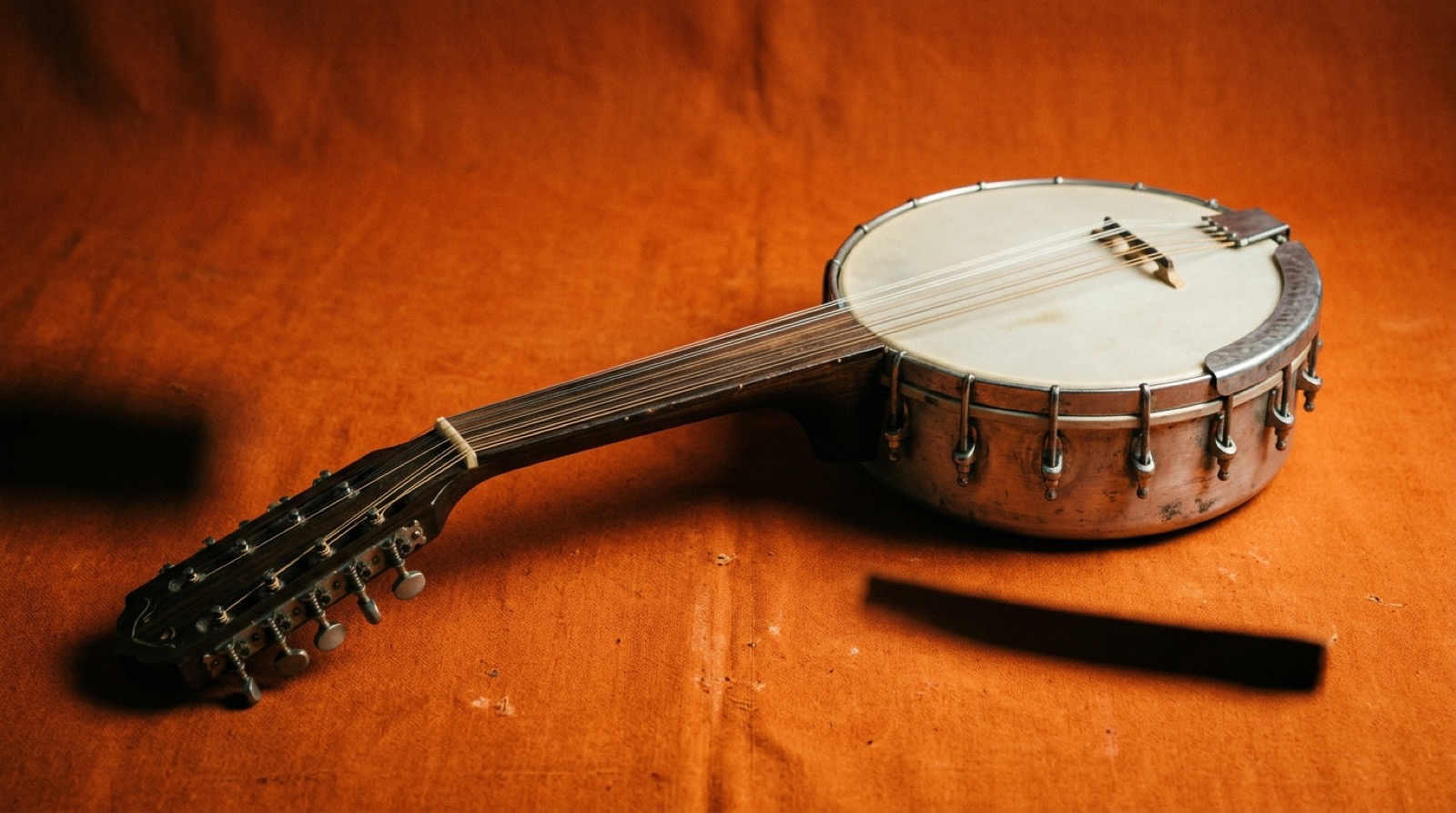
Zeynel Abidin Cümbüş invented the cümbüş in Istanbul in 1930. The premise was simple: take the fretless neck of an ud, replace the carved-wood bowl back with an aluminum banjo pot, stretch a plastic skin where the spruce soundboard would go, and replace the eleven gut strings with twelve steel ones in six double courses.
The result was an instrument that was louder, brighter, cheaper, more durable, and capable of cutting through any wedding-band ensemble in the country. It became a folk instrument by acclamation within a decade.
Why aluminum
The ud's wooden bowl is acoustically gorgeous and mechanically fragile. Wooden bowls crack, ribs separate, the body deforms with humidity. The aluminum pot of the cümbüş does none of this. It also reflects sound more directly forward — the banjo pot acts like a small loudspeaker, which is exactly what an instrument needs to be heard at a Turkish wedding over the davul drum and the zurna.
The trade-off is a brighter, more nasal tone, which is also exactly what folk players wanted. The cümbüş does not sound like an ud and was never trying to.
Twelve strings, ud geometry
The cümbüş uses ud tunings — the standard Turkish ud setting D2 A2 D3 G3 B3 E4 A4 with the courses doubled at the unison or octave. The six double courses are tuned: 1st course unison, 2nd unison, 3rd unison, 4th octave, 5th octave, 6th octave. Six pairs of twelve strings total.
Maqam handles the cümbüş in two modes. The default tuning shows the courses as paired pitches. The second tuning Maqam ships is a cümbüş-specific folk setting used in eastern Anatolian folk repertoire, where the bottom course drops a tone and the top course rises a semitone.
Tuning steel through plastic
Steel strings stretched across a plastic head sit at higher tension than gut strings on wood. They go out of tune differently — temperature shifts the head tension, which shifts every string at once.
This means cümbüş players check tuning constantly. The high contrast of Maqam's neon green sweet-spot indicator works on stages where the cümbüş actually plays: weddings, festivals, outdoor halays. Auto-detect locks onto the dominant pitch of a double course, ignoring the unison/octave doubling, so tuning each pair is a single tap operation.
Every tuning, mapped.
Below is every tuning Maqam ships for the Cümbüş — straight from the app's reference data. Strings, reference frequencies, related makams, and notes.
Pes akort, lower-pitched ud-style tuning.
Tiz akort, higher-pitched, perfect 4th up from Pes.
Find the perde in your pocket.
The cümbüş is a 20th-century invention that became a tradition. Maqam treats it that way — same engineering rigour, same map of tunings.
 GET
GET